Watercolor
A painting technique using pigments suspended in a water-soluble binder, applied to paper in transparent washes that allow the white of the paper to show through, creating luminous effects of light and color.
What Is Watercolor?
Watercolor painting uses pigments ground in a water-soluble binder, typically gum arabic, and applied to paper with water as the medium. The defining characteristic of watercolor is its transparency: rather than covering the surface opaquely, the paint is applied in thin washes through which the white of the paper remains visible, serving as the lightest value in the composition. This transparency gives watercolor its distinctive luminosity, as light passes through the paint layers, reflects off the white paper, and returns to the viewer's eye carrying the color of the pigment.
The medium has a rich history spanning centuries and cultures. In the West, Albrecht Durer created remarkably detailed watercolor studies of plants and animals in the early sixteenth century that demonstrate the medium's capacity for precision and naturalistic rendering. However, watercolor achieved its greatest prominence in eighteenth and nineteenth century Britain, where artists like J.M.W. Turner, John Constable, and John Singer Sargent elevated it from a medium associated with amateur sketching to one capable of rivaling oil painting in ambition and achievement. Turner's watercolors, in particular, are among the most admired works in the history of the medium, dissolving landscape into veils of pure color and light.
In America, Winslow Homer used watercolor to capture the power of the sea and the beauty of the wilderness with a directness and vitality that remain unmatched. John Marin brought modernist abstraction to watercolor in the early twentieth century, and contemporary artists continue to explore the medium's unique properties. The apparent simplicity of watercolor is deceptive; the medium is notoriously unforgiving because its transparency means that errors cannot be easily covered or corrected. The best watercolorists achieve effects of spontaneity and freshness that belie years of technical mastery.
Why Does It Matter for Collectors?
Watercolors have historically been undervalued relative to oil paintings, but this gap has narrowed considerably as collectors recognize the technical skill and artistic achievement the medium demands. Major watercolors by Turner, Homer, Sargent, and Cezanne now achieve prices in the millions, and contemporary watercolors by artists like Marlene Dumas command strong market interest.
Because watercolors are works on paper, they are sensitive to light, humidity, and handling. Prolonged exposure to light can cause colors to fade, and high humidity encourages mold growth and foxing. Watercolors should be framed under UV-protective glass, stored in acid-free materials, and displayed in areas with controlled lighting. When evaluating watercolors for purchase, examine the vibrancy of colors carefully, as fading may indicate previous improper display, and check the paper for any foxing, staining, or water damage.
Related Terms
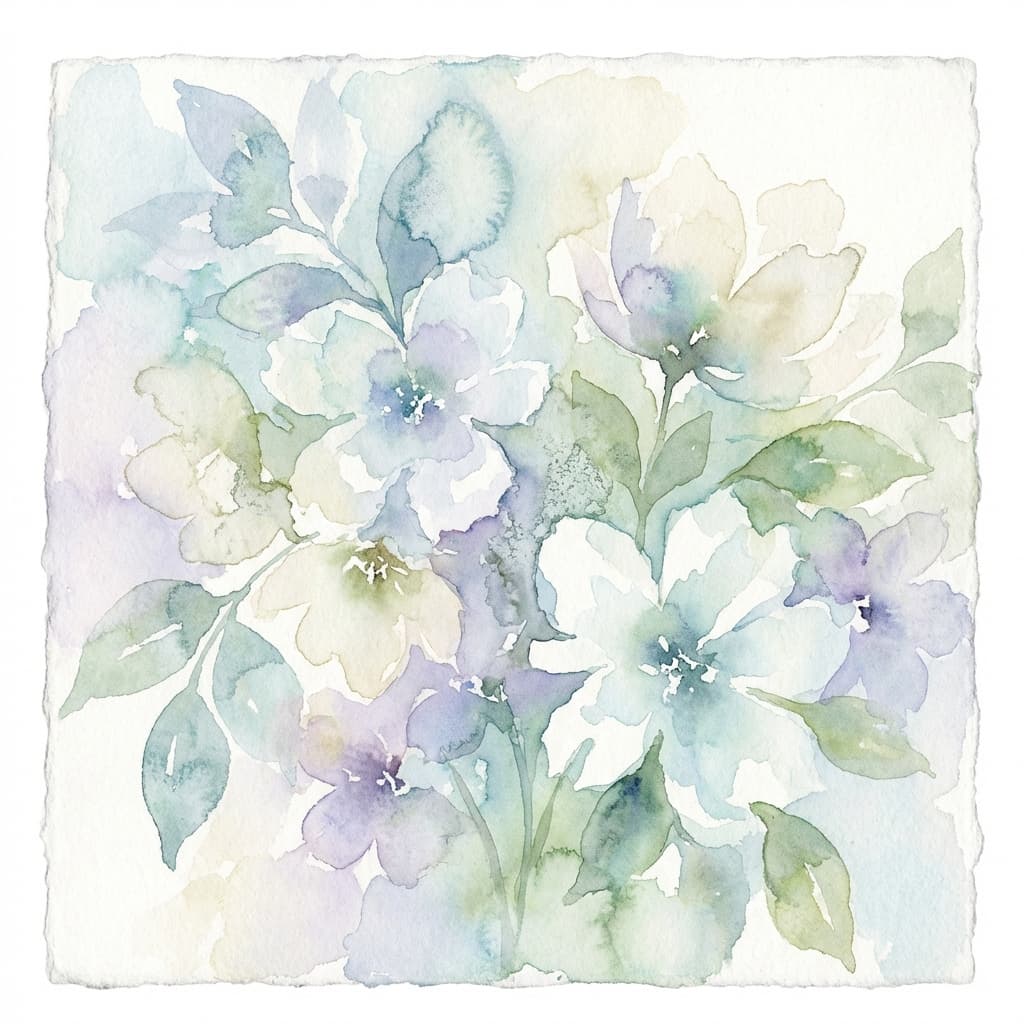
Visual representation of Watercolor