Acrylic Painting
A painting technique using pigments suspended in an acrylic polymer emulsion, offering fast drying times, versatile application, and exceptional durability compared to traditional oil paints.
What Is Acrylic Painting?
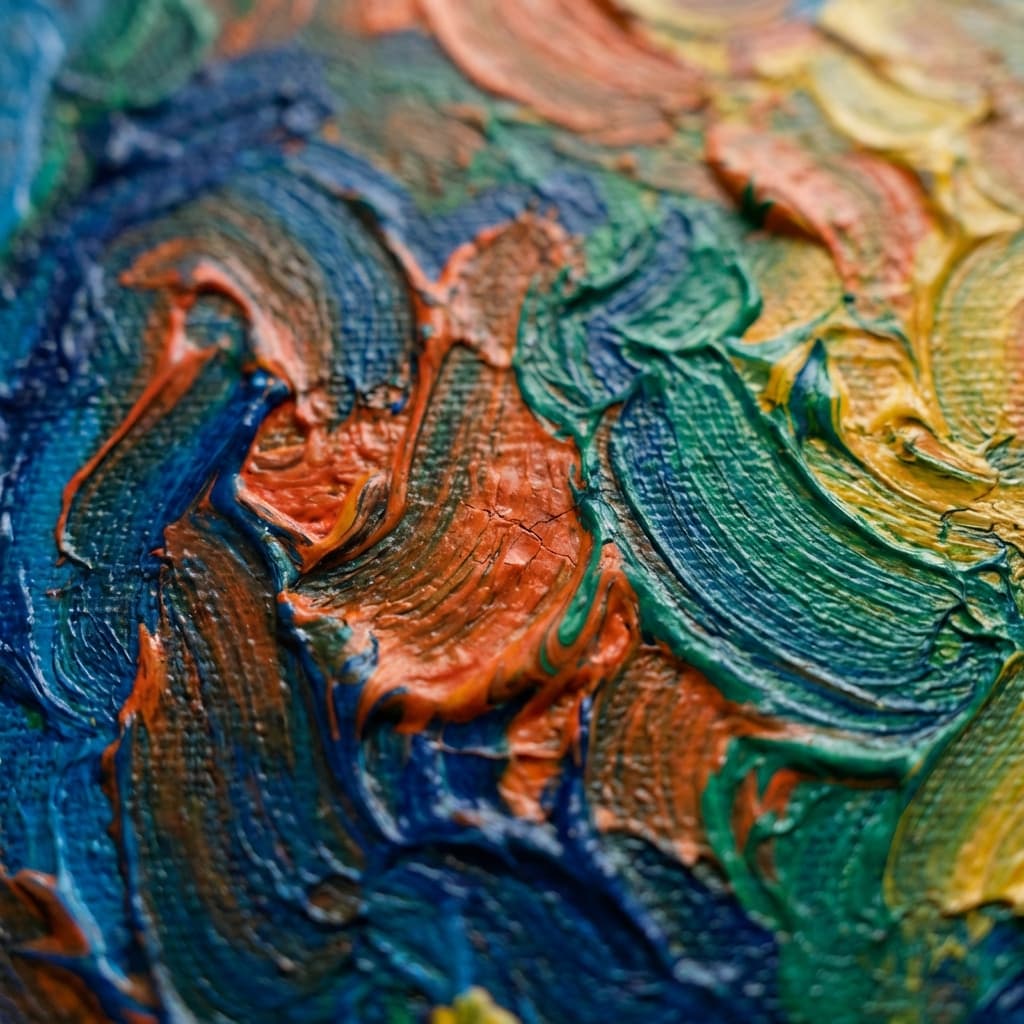
Acrylic paint was developed in the mid-twentieth century and quickly became one of the most widely used artistic media. The paint consists of pigment particles dispersed in an acrylic polymer emulsion, which is essentially a plastic-based binder that dries through evaporation of water. Once dry, acrylic paint forms a flexible, water-resistant film that is remarkably durable. Unlike oil paint, which can take days or weeks to dry, acrylics dry within minutes to hours, allowing artists to work rapidly, build up layers quickly, and complete paintings in compressed timeframes.
The versatility of acrylics is one of their greatest strengths. Depending on how they are applied and what mediums are mixed in, acrylics can mimic the appearance of oils, watercolors, or gouache. They can be applied in thick impasto strokes, thinned to transparent washes, or poured and dripped in fluid applications. Artists can work on virtually any surface, including canvas, paper, wood, metal, and fabric, without the extensive surface preparation that oil painting requires. This flexibility attracted many prominent artists beginning in the 1960s, including David Hockney, whose vivid swimming pool paintings are among the most famous acrylic works ever created, and Mark Rothko, who used acrylics in some of his later color field paintings.
Contemporary artists continue to push the boundaries of what acrylics can achieve. The development of heavy body acrylics, fluid acrylics, acrylic inks, and a wide range of acrylic mediums and gels has expanded the technical possibilities enormously. Artists like Gerhard Richter have used acrylics alongside oils, while younger painters increasingly choose acrylics as their primary medium for both practical and aesthetic reasons.
Why Does It Matter for Collectors?
From a conservation standpoint, acrylic paintings offer several advantages. The acrylic binder does not yellow over time the way oil paint can, and the flexible film is resistant to cracking. However, acrylics are not without conservation concerns. The paint surface can be sensitive to heat and pressure, potentially becoming tacky in warm conditions and attracting dust and dirt that becomes embedded in the surface. Cleaning acrylic paintings requires care, as some solvents that are safe for oil paintings can damage acrylic surfaces.
When collecting acrylic works, pay attention to the quality of materials the artist used. Professional-grade acrylics have higher pigment concentrations and better lightfastness than student-grade products. The support material, whether canvas, panel, or paper, also affects the long-term stability of the work. As with all paintings, proper framing, controlled environmental conditions, and avoidance of direct sunlight will help preserve acrylic works for generations.
Related Terms
Visual representation of Acrylic Painting