Oil Painting
A painting technique using pigments ground in drying oils such as linseed, walnut, or poppy oil, prized for its rich color, luminous depth, and ability to create effects ranging from transparent glazes to thick impasto.
What Is Oil Painting?
Oil painting has been the dominant painting medium in Western art for over five centuries. The technique involves mixing finely ground pigments with a drying oil, most commonly linseed oil, to create a paint that is slow drying, infinitely blendable, and capable of producing an unrivaled range of visual effects. While oil-based paints existed in some form for centuries, the technique was perfected in the early fifteenth century by Netherlandish painters, most notably Jan van Eyck, who developed methods of layering transparent glazes over opaque underlayers to achieve luminosity and depth of color that astonished his contemporaries.
The slow drying time of oil paint is both its greatest advantage and its defining characteristic. Unlike fresco, watercolor, or acrylic, which require the artist to work quickly, oil paint remains workable for hours or even days, allowing for extended blending, reworking, and refinement. This property makes oil painting uniquely suited to rendering subtle gradations of light, color, and tone. Leonardo da Vinci exploited this quality in his sfumato technique, building up imperceptibly thin layers to create the soft, hazy transitions visible in the "Mona Lisa." Vermeer used oil's translucency to capture the luminous quality of daylight entering a Dutch interior with uncanny realism.
From the Renaissance through the twentieth century, virtually every major painter worked in oils. Titian, Velazquez, Rembrandt, Turner, Monet, Cezanne, and Picasso all created their most celebrated works in the medium. Even as acrylics and other media gained popularity in the second half of the twentieth century, oil painting retained its prestige and remained the medium of choice for many painters who valued its unmatched handling properties and visual richness.
Why Does It Matter for Collectors?
Oil paintings make up the largest and most valuable category of artwork in the global market. The medium's prestige, historical associations, and visual qualities mean that oil paintings by significant artists generally command higher prices than equivalent works in other media. For collectors, understanding the properties of oil paint helps in evaluating the quality and condition of paintings under consideration.
Oil paintings require attentive care to remain in good condition. They should be kept at stable temperature and humidity levels and protected from direct sunlight, which can cause pigments to fade and varnish to yellow. Professional cleaning and varnish removal should be performed only by qualified conservators. When examining an oil painting, look for signs of cracking, flaking, discoloration, or overpainting that might indicate condition issues or previous restoration. A detailed condition report from a conservator is advisable before any significant purchase.
Related Terms
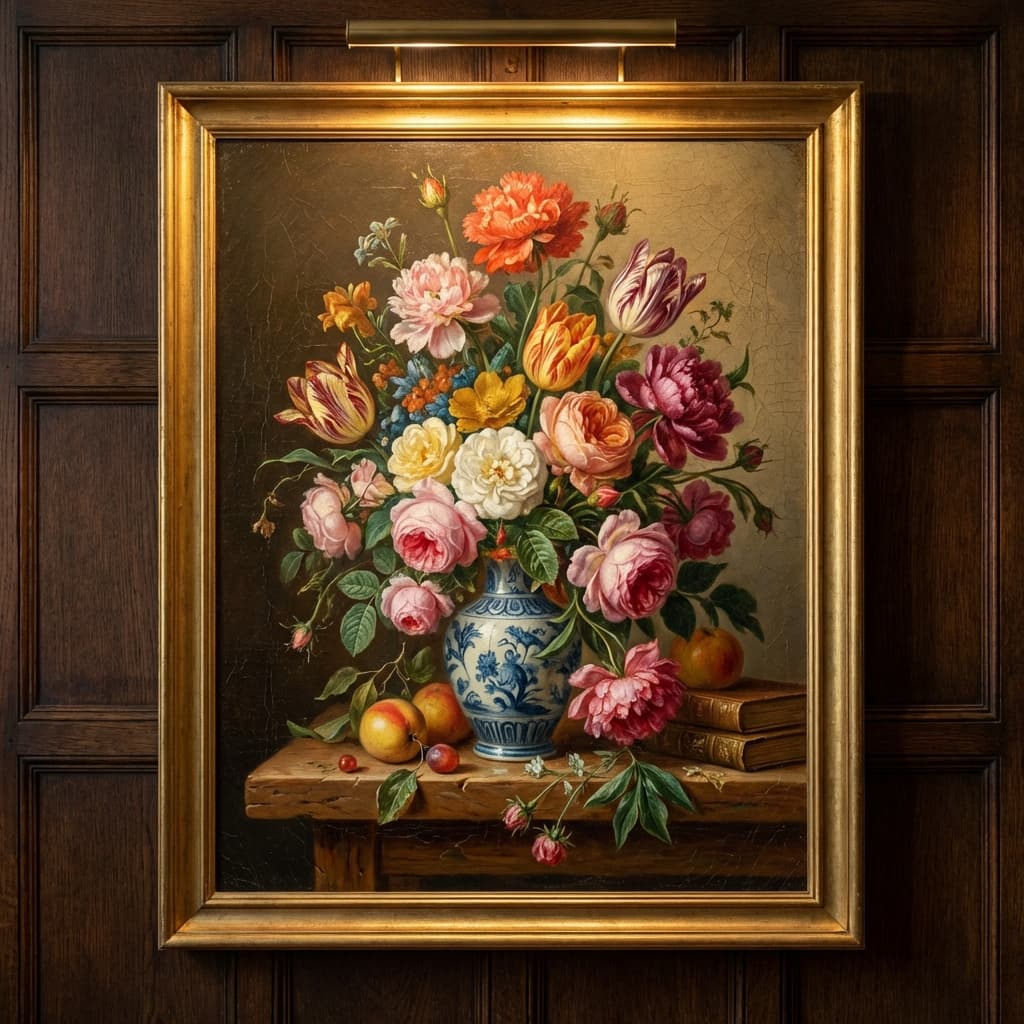
Visual representation of Oil Painting