Mixed Media
An artwork created using a combination of different materials and techniques, such as paint, ink, collage, fabric, photography, and found objects, integrated into a single composition.
What Is Mixed Media Art?
Mixed media refers to any artwork that combines two or more distinct artistic materials or techniques within a single work. While the concept is simple, the range of what mixed media encompasses is enormous. A painting that incorporates collaged photographs, printed text, and areas of drawing alongside traditional brushwork qualifies as mixed media. So does a sculpture that combines welded steel with found objects, resin, and paint. The defining characteristic is the intentional blending of different materials to create a unified artistic expression that could not be achieved through any single medium alone.
The roots of mixed media practice can be traced to the Cubist papiers colles of Picasso and Braque, and the technique expanded dramatically through Dada, Surrealism, and the post-war avant-garde. Robert Rauschenberg's "combines" of the 1950s and 1960s, which merged painting with everyday objects like tires, stuffed animals, and radios, were landmark mixed media works that redefined the boundaries between painting and sculpture. Joseph Cornell's shadow boxes, assembling found objects, photographs, and ephemera into poetic enclosed worlds, became another influential model for mixed media practice.
In contemporary art, mixed media has become so prevalent that it is arguably the dominant mode of working. Artists like Kara Walker, who combines silhouettes, projections, and installation; Julie Mehretu, who layers architectural drawing, painting, and printing; and El Anatsui, who creates monumental tapestry-like works from recycled bottle caps and aluminum, all demonstrate the creative range that mixed media approaches make possible. The continued development of new materials and technologies, including digital printing, laser cutting, and 3D printing, continues to expand the vocabulary available to mixed media artists.
Why Does It Matter for Collectors?
Mixed media works require collectors to think carefully about conservation and care, because different materials age and respond to environmental conditions in different ways. Paper elements may yellow, organic materials may deteriorate, adhesives may fail, and certain combinations of materials can interact negatively over time. Before purchasing a mixed media work, ask the artist or gallery about the specific materials used and any special care requirements.
Despite these considerations, mixed media art offers exceptional collecting opportunities. The technique's inherent variety means that no two works are quite alike, even by the same artist, giving each piece a distinctive character. Mixed media works also tend to photograph poorly relative to their in-person impact, which means that collectors who take the time to view works personally can sometimes find excellent value that the online market underprices.
Related Terms
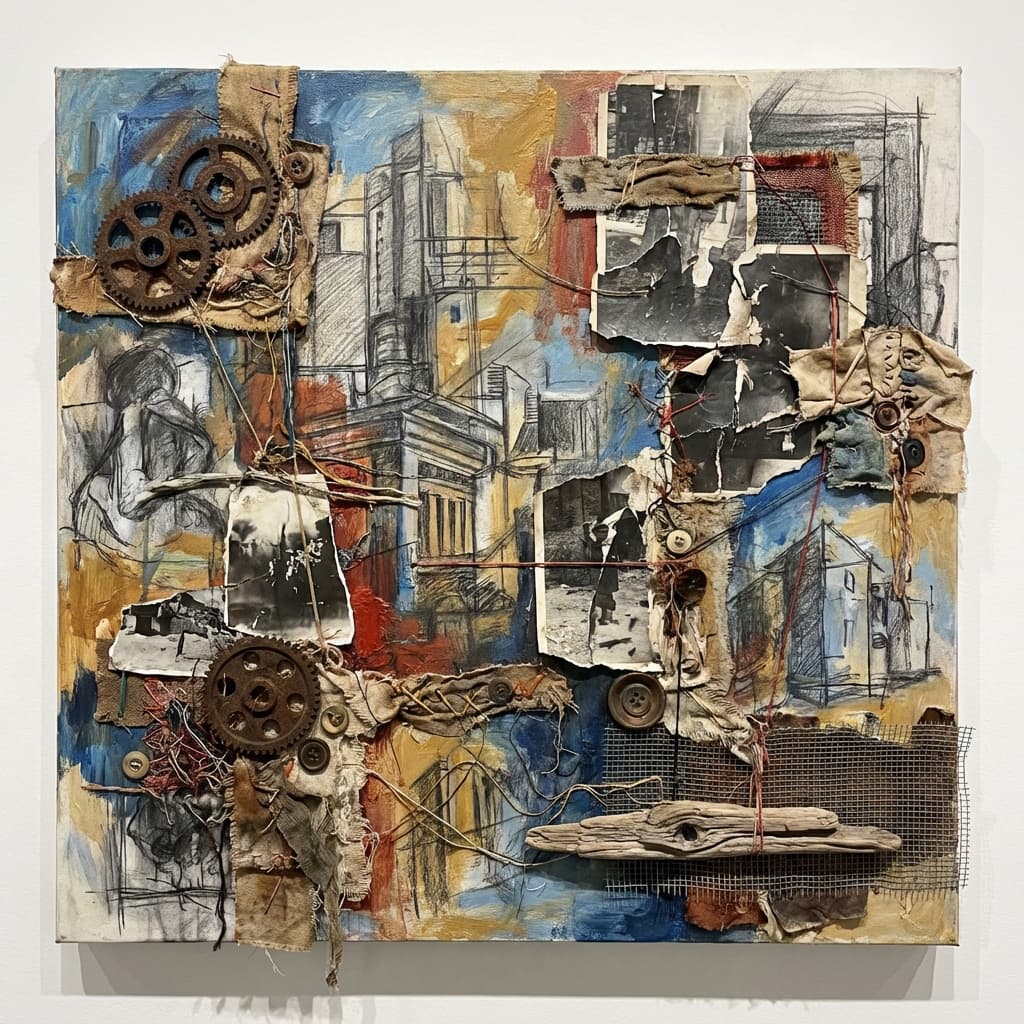
Visual representation of Mixed Media