Fresco
A mural painting technique in which pigments are applied to freshly laid wet plaster, bonding chemically with the wall surface as it dries to create an exceptionally durable work of art.
What Is Fresco?
Fresco is among the most ancient and enduring painting techniques, with examples surviving from Minoan Crete, ancient Rome, and civilizations around the world. The term comes from the Italian word for "fresh," referring to the critical requirement that pigments be applied to freshly laid, still-wet lime plaster. As the plaster dries and undergoes a chemical reaction called carbonation, the pigments become permanently embedded in the wall surface, creating a painting of extraordinary durability that is literally part of the architecture.
The technique known as "buon fresco" or true fresco requires the artist to work quickly on each section, called a "giornata" or day's work, before the plaster sets. This demands meticulous advance planning, as mistakes cannot easily be corrected once the plaster begins to dry. The artist must prepare full-scale drawings called cartoons, transfer the design to the wall, and execute the painting with confidence and speed. This technical challenge made fresco the supreme test of an artist's skill during the Renaissance. Michelangelo's Sistine Chapel ceiling, completed between 1508 and 1512, remains the most famous fresco in history, a work of such ambition and technical mastery that it redefined the possibilities of the medium.
Raphael's frescoes in the Vatican Stanze, Giotto's scenes in the Arena Chapel in Padua, and the works of Masaccio in the Brancacci Chapel in Florence represent other pinnacles of the form. In the twentieth century, the Mexican muralists Diego Rivera, Jose Clemente Orozco, and David Alfaro Siqueiros revived fresco as a vehicle for political and social expression, creating monumental public works across Mexico and the United States.
Why Does It Matter for Collectors?
Because frescoes are integral to the architectural surfaces on which they are created, they cannot be collected in the traditional sense. They are immovable works that belong to buildings. However, understanding fresco is essential for any collector interested in art history, as the technique produced many of the most important works in Western art. Preparatory drawings, cartoons, and studies for frescoes do appear on the market and can be highly valuable, offering direct insight into the creative process behind monumental works.
Collectors of works on paper may encounter studies by fresco painters that represent significant art-historical documents. Additionally, fresco fragments, sections that were removed from walls during renovations or salvage operations, occasionally appear at auction, though their provenance requires careful scrutiny to ensure they were not illegally removed from protected sites.
Related Terms
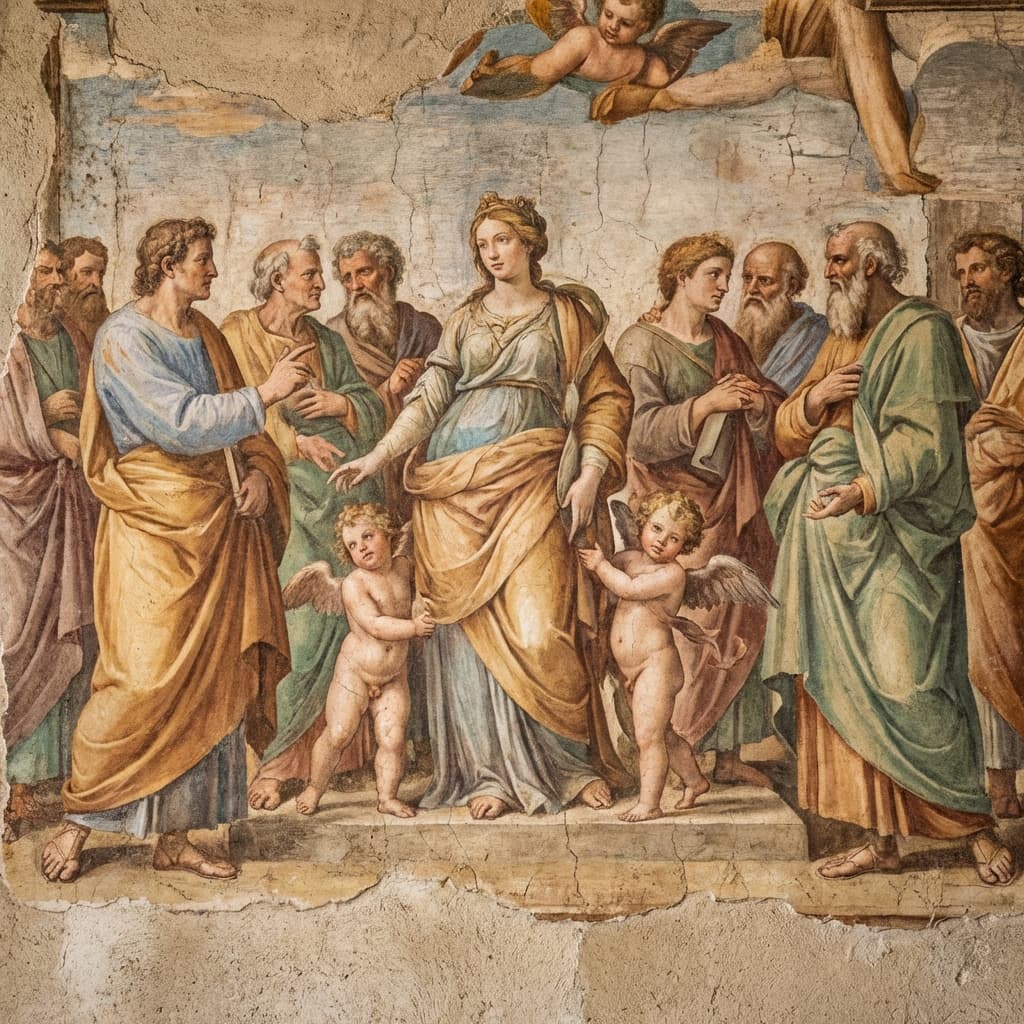
Visual representation of Fresco