Encaustic
An ancient painting technique that uses heated beeswax mixed with pigments and sometimes damar resin, applied to a surface and then fused with heat to create a luminous, textured finish.
What Is Encaustic Painting?
Encaustic painting is one of the oldest known painting techniques, dating back to at least the fifth century BCE in ancient Greece. The word encaustic comes from the Greek "enkaustikos," meaning to burn in, referring to the essential step of fusing each layer of wax with heat. The medium consists of beeswax melted and mixed with pigments, often with the addition of damar resin to harden the final surface. The artist applies the molten wax mixture to a rigid support, typically wood panel, and then uses a heat source such as a heat gun, torch, or heated metal tool to fuse the layers together, creating a bond between the wax and the surface.
The most famous surviving encaustic works are the Fayum mummy portraits from Roman-era Egypt, dating from the first through third centuries CE. These remarkably well-preserved portraits demonstrate the extraordinary longevity of encaustic as a medium. The wax encapsulates the pigments and creates a surface that is resistant to moisture and environmental degradation, which is why these nearly two-thousand-year-old paintings retain vivid color and detail that would be impossible in most other media.
In the twentieth century, Jasper Johns revived interest in encaustic with his iconic flag and target paintings of the 1950s. Johns used the medium's quick-setting properties to build up richly textured surfaces in which individual brushstrokes remain visible, frozen in wax as a record of the painting process. Contemporary artists continue to explore encaustic, drawn to its unique combination of luminosity, texture, and historical resonance. The medium's ability to embed materials like paper, fabric, and photographs within layers of translucent wax makes it particularly suited to mixed-media approaches.
Why Does It Matter for Collectors?
Encaustic works have excellent long-term stability, as demonstrated by the Fayum portraits, but they do require specific care. The wax surface can be sensitive to temperature extremes. High heat can soften the wax and cause damage, while very cold temperatures can make it brittle. Direct sunlight should be avoided for prolonged periods. A phenomenon called bloom, a whitish haze on the surface, can sometimes occur but is easily resolved by gently warming the surface with a hair dryer and buffing with a soft cloth.
When collecting encaustic works, look for a well-fused surface without visible bubbling or separation between layers. The luminous, almost translucent quality of encaustic gives it a visual depth that is distinctive and difficult to achieve in any other medium, making original encaustic paintings particularly rewarding to experience in person.
Related Terms
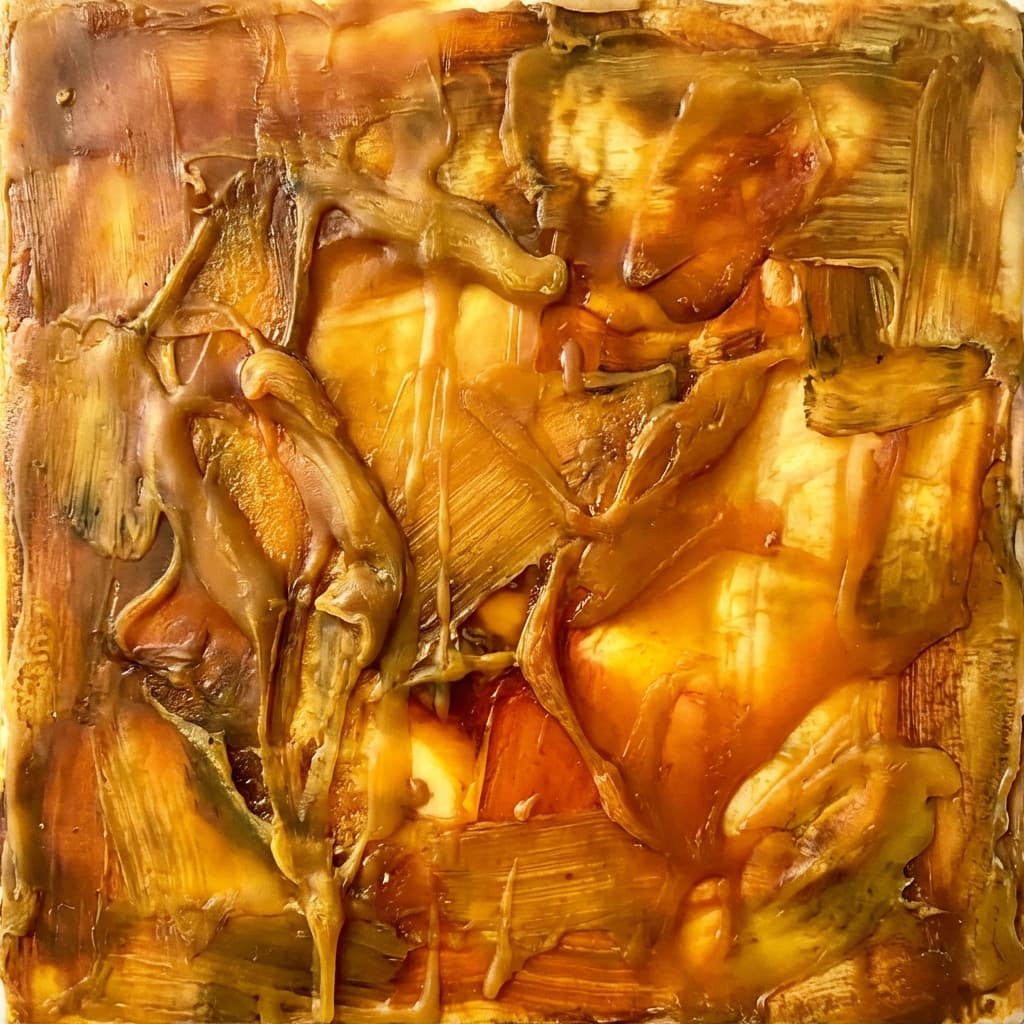
Visual representation of Encaustic