Post-Impressionism
A broad term for the diverse styles that emerged in French art from the late 1880s to early 1900s, extending beyond Impressionism's focus on light to emphasize structure, form, and emotional expression.
What Is Post-Impressionism?
Post-Impressionism is not a single style but a collective term coined by the British art critic Roger Fry in 1910 to describe the varied approaches of artists who built upon and then moved beyond the achievements of Impressionism. The major Post-Impressionist painters, including Paul Cezanne, Vincent van Gogh, Paul Gauguin, and Georges Seurat, all started from the Impressionist interest in color and light but pushed their art in radically different directions, each pioneering formal innovations that would shape the course of modern art.
Cezanne pursued a systematic analysis of natural forms, breaking landscapes, still lifes, and figures into geometric planes that anticipated Cubism. His famous instruction to "treat nature by the cylinder, the sphere, the cone" became a guiding principle for early twentieth-century abstraction. Van Gogh, by contrast, used intensely saturated color and swirling, expressive brushwork to convey emotional states, creating paintings of extraordinary psychological intensity. His "Starry Night" and self-portraits are among the most recognized images in all of art. Gauguin sought spiritual and aesthetic renewal by leaving Europe for Tahiti, developing a style of bold, flat color areas and simplified forms influenced by non-Western art traditions.
Seurat took yet another path, developing Pointillism, a technique in which tiny dots of pure color are applied systematically and blend optically when viewed from a distance. His monumental "A Sunday Afternoon on the Island of La Grande Jatte" is both a masterpiece of patient technical execution and a revolutionary experiment in color theory.
Why Does It Matter for Collectors?
Post-Impressionist masterpieces by the four major figures are among the most expensive artworks ever sold. Cezanne's "The Card Players" was reportedly acquired for over $250 million, and Van Gogh's works consistently achieve auction records. For most private collectors, the market at this level is inaccessible, but the broader Post-Impressionist period includes many accomplished artists whose works remain within reach.
Artists like Maximilien Luce, Henri-Edmond Cross, and Paul Signac extended Seurat's Pointillist techniques and produced vibrant canvases that appear at auction regularly. Prints, drawings, and works on paper by the major figures also offer collecting possibilities. When evaluating Post-Impressionist works, look for the distinctive formal qualities that defined each artist's contribution, whether it is Cezanne's structural rigor or Van Gogh's expressive intensity, and ensure thorough provenance documentation.
Related Terms
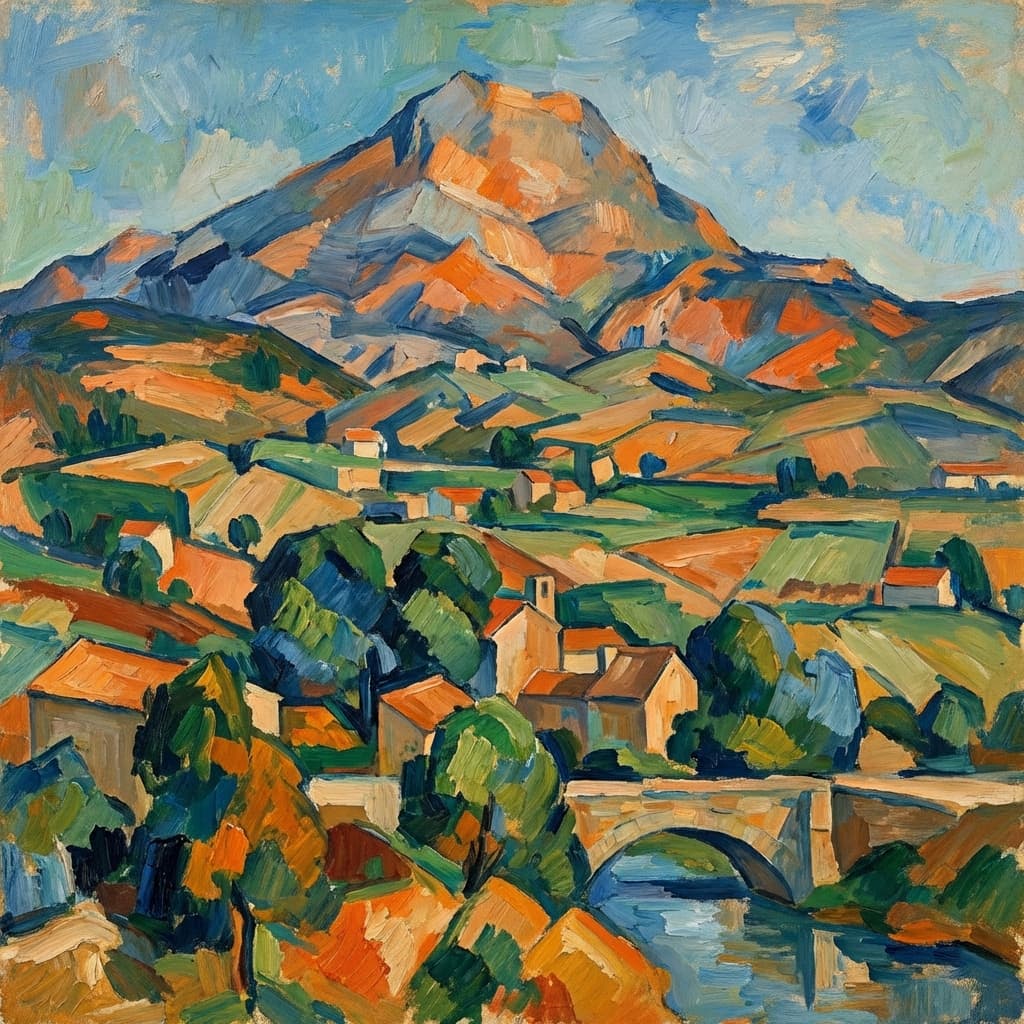
Visual representation of Post-Impressionism