Expressionism
An early 20th-century movement in which artists distorted reality through exaggerated color, brushwork, and form to convey emotional experience rather than physical appearance.
What Is Expressionism?
Expressionism emerged in the early 1900s primarily in Germany and Austria as artists sought to depict the world not as it appeared objectively but as it felt subjectively. Where Impressionism had focused on capturing the fleeting effects of light and atmosphere, Expressionism turned inward, using art as a vehicle for raw emotional and psychological experience. The style is characterized by bold, often jarring colors, distorted forms, visible and energetic brushwork, and compositions that prioritize feeling over accuracy.
Two key groups defined German Expressionism. Die Brucke (The Bridge), founded in Dresden in 1905 by Ernst Ludwig Kirchner, Karl Schmidt-Rottluff, and others, drew on the bold simplification of African and Oceanic art, medieval woodcuts, and the intense color of Post-Impressionism. Their works convey a sense of urgency and unease, reflecting anxieties about modern urban life. Der Blaue Reiter (The Blue Rider), founded in Munich in 1911 by Wassily Kandinsky and Franz Marc, took a more spiritual approach, exploring the expressive potential of color and moving toward increasing abstraction. Kandinsky's theoretical writings on the spiritual in art became foundational texts of modern aesthetics.
Beyond these groups, Expressionism encompassed a wide range of artists. Edvard Munch's "The Scream," painted in 1893, is often cited as a precursor, while Egon Schiele's raw, confrontational figure studies pushed the movement's emotional intensity to extremes. The movement's influence extended into film, theater, literature, and music, shaping the broader culture of early twentieth-century Europe.
Why Does It Matter for Collectors?
Expressionist works remain among the most sought-after in the art market. Paintings by Kirchner, Kandinsky, and other major figures regularly achieve auction results in the millions. The movement's emphasis on emotional authenticity gives the best Expressionist works a visceral impact that continues to resonate with contemporary audiences. For collectors, this enduring emotional power translates into consistent market demand.
German Expressionist prints, particularly woodcuts, offer a more affordable way to collect significant works from the movement. Kirchner, Schmidt-Rottluff, and Emil Nolde were all accomplished printmakers, and their graphic works capture the bold contrasts and raw energy of the movement. When collecting, be aware that the Nazi regime condemned Expressionism as "degenerate art," and the resulting confiscations and dispersals created complex provenance histories that require careful research.
Related Terms
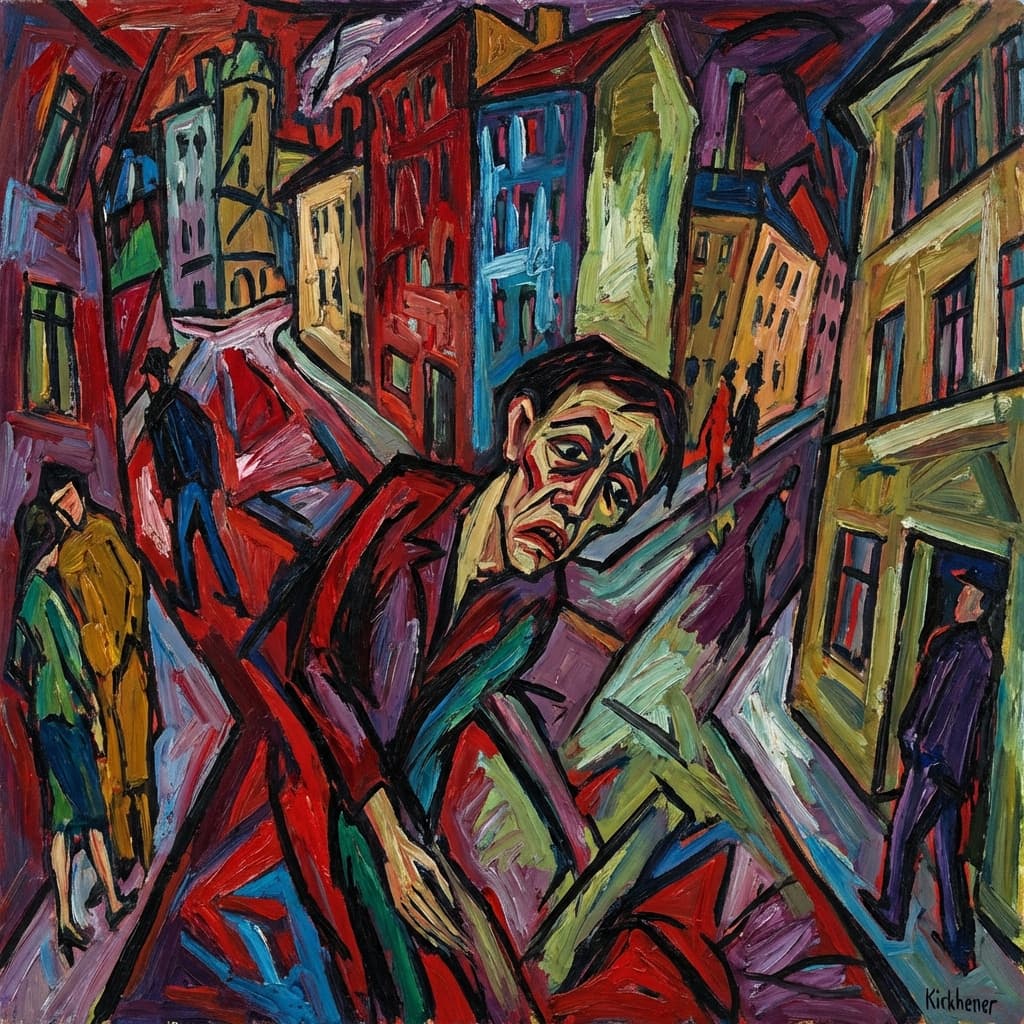
Visual representation of Expressionism