Fauvism
A short-lived but influential early 20th-century French art movement characterized by the use of vivid, non-naturalistic color and bold brushwork, led by Henri Matisse and Andre Derain.
What Is Fauvism?
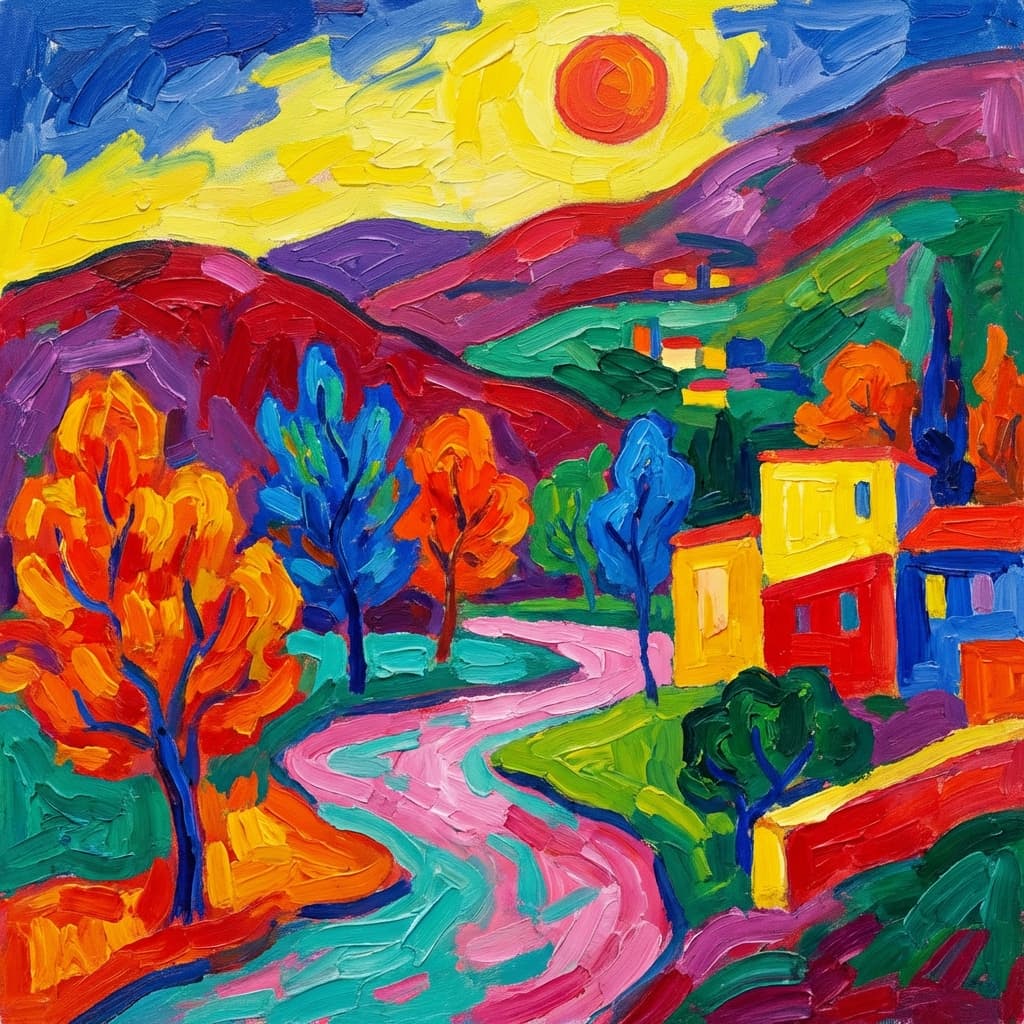
Fauvism takes its name from the French word "fauves," meaning wild beasts. The label was applied by art critic Louis Vauxcelles when he saw the explosively colorful paintings exhibited by Henri Matisse, Andre Derain, Maurice de Vlaminck, and others at the 1905 Salon d'Automne in Paris. Surrounded by so much untamed color, Vauxcelles reportedly described the gallery as a cage of wild animals. The name stuck, and the artists embraced it.
The Fauvist painters liberated color from its descriptive function. Trees could be red, faces could be green, and skies could be orange if the emotional or compositional logic of the painting demanded it. Matisse, the movement's central figure, declared that he wanted to create art that was "like a good armchair" for the mind, providing visual pleasure through the harmony and intensity of color relationships. His painting "Woman with a Hat" scandalized the 1905 Salon with its seemingly arbitrary palette, yet its color choices were anything but random; they were carefully orchestrated to achieve expressive balance.
Derain's views of London and Collioure from this period rank among the most vibrant landscapes in art history, with hot pinks, electric blues, and acid greens applied in loose, energetic strokes. Vlaminck, a self-taught painter who admired Van Gogh, squeezed paint directly from tubes onto the canvas in thick, aggressive marks. Though Fauvism as a cohesive movement lasted only about three years, from 1904 to 1908, its liberation of color had a permanent impact on modern art. It directly influenced Expressionism and paved the way for the increasingly abstract uses of color that would define much of twentieth-century painting.
Why Does It Matter for Collectors?
Fauvist paintings by Matisse and Derain are among the most valuable works of the early modern period, and major examples rarely appear on the market. When they do, prices are typically in the millions. However, works on paper, prints, and smaller paintings by secondary Fauvist artists like Albert Marquet, Charles Camoin, and Henri Manguin offer more accessible entry points into the movement.
The brevity of Fauvism means that authentic works from the core period are relatively scarce, which supports strong pricing. Collectors should focus on works that demonstrate the movement's defining qualities, particularly bold, non-naturalistic color and expressive freedom of brushwork. As with all early modern art, provenance research and authentication through recognized experts or catalogue raisonnes are essential steps before purchasing.
Related Terms
Visual representation of Fauvism