Minimalism
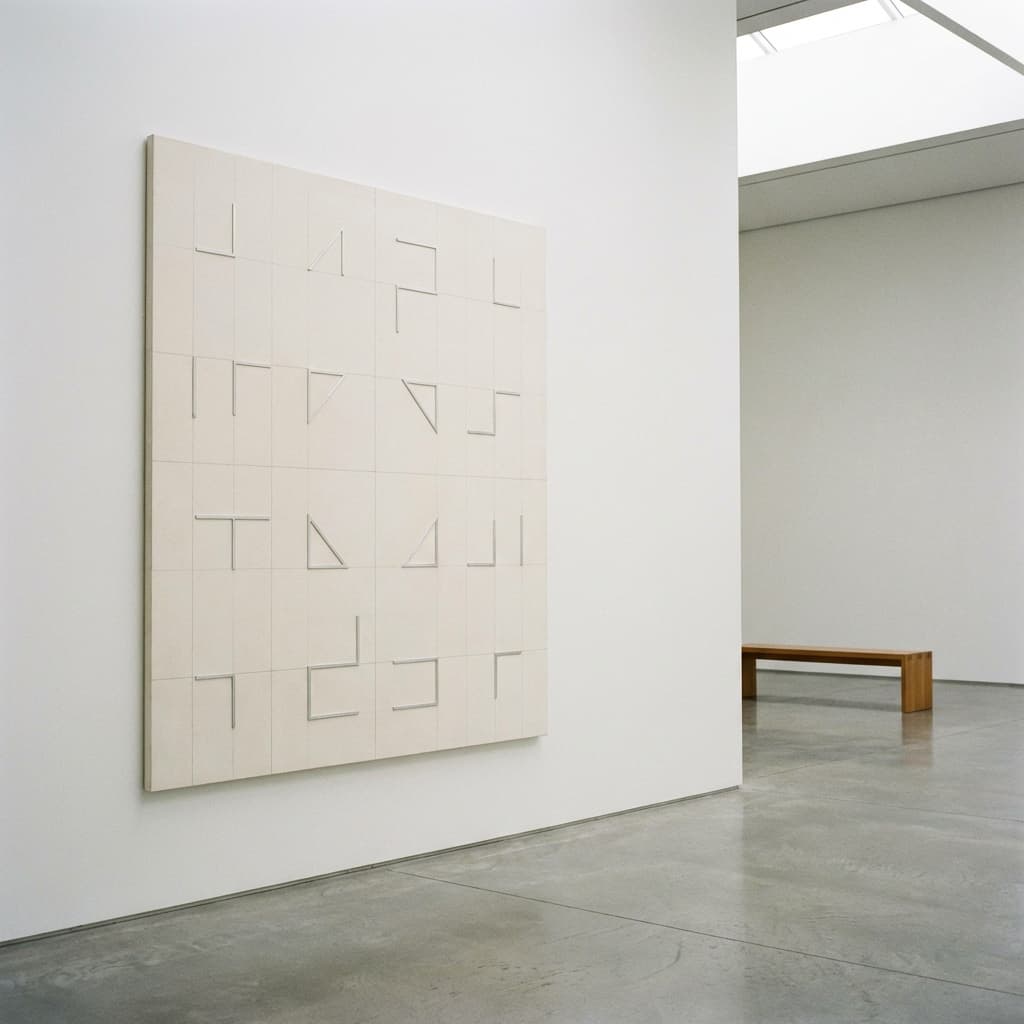
An art movement that emerged in the 1960s emphasizing extreme simplicity of form, using geometric shapes, industrial materials, and monochromatic palettes to strip art down to its essential elements.
What Is Minimalism?
Minimalism emerged in New York in the early 1960s as a reaction against the emotional intensity and gestural expressiveness of Abstract Expressionism. Where the Abstract Expressionists had celebrated the artist's subjective experience and the physical act of painting, the Minimalists sought to remove personal expression entirely, creating works that existed as pure objects in space. The movement's guiding principle was articulated by the artist Frank Stella, who said of his stripe paintings: "What you see is what you see."
The major Minimalist artists include Donald Judd, Dan Flavin, Carl Andre, Sol LeWitt, and Robert Morris. Judd created precise, industrially fabricated boxes and stacks from materials like aluminum, Plexiglas, and plywood, arranged in mathematically determined sequences. Flavin used commercially available fluorescent light tubes to create installations that transformed gallery spaces with colored light. Andre laid bricks, metal plates, and timber blocks directly on the floor in grid arrangements that challenged viewers to reconsider the nature of sculpture. In painting, Agnes Martin and Robert Ryman pursued Minimalist principles through subtle, meditative canvases that explored the most refined nuances of surface, color, and line.
Minimalism's influence extended far beyond the art world, shaping architecture, design, music, and literature. The movement's emphasis on clarity, precision, and the viewer's phenomenological experience of objects in space laid the groundwork for Conceptual Art, Land Art, and Installation Art.
Why Does It Matter for Collectors?
Minimalist works by major artists have become some of the most valuable in the contemporary art market. Judd's sculptures, Flavin's light works, and Martin's paintings regularly achieve prices in the millions at auction and through galleries. The movement's intellectual rigor and visual clarity have given it enduring appeal among collectors, institutions, and curators.
For collectors entering this market, prints and multiples by Minimalist artists offer more accessible price points. Sol LeWitt's wall drawings, which exist as sets of instructions that can be executed by others, present unique collecting opportunities and questions about authorship that make them particularly fascinating. When collecting Minimalist art, condition is especially important because the movement's emphasis on clean surfaces and precise fabrication means that any damage or deterioration is immediately visible and difficult to disguise.
Related Terms
Visual representation of Minimalism