Etching
A printmaking technique in which an artist draws through an acid-resistant ground on a metal plate, then submerges the plate in acid to bite the exposed lines, creating an image that is inked and printed on paper.
What Is an Etching?
Etching is an intaglio printmaking technique that has been one of the most important methods of image-making in Western art since the early sixteenth century. The process begins when the artist covers a polished metal plate, typically copper or zinc, with a thin layer of acid-resistant material called a ground. The artist then draws through the ground with a pointed tool called a needle, exposing the bare metal beneath. The plate is submerged in an acid bath, which eats into the metal wherever the ground has been removed, creating grooves that will hold ink. The remaining ground is cleaned off, the plate is inked, the surface is wiped, and dampened paper is pressed against it to produce the print.
The great advantage of etching over engraving is the freedom of the drawing gesture. Because the artist draws through a soft ground rather than cutting directly into resistant metal, the lines have a spontaneous, fluid quality similar to drawing with a pen or pencil. This ease of mark-making attracted many painters to etching as a complementary medium. Rembrandt van Rijn is universally regarded as the greatest etcher in history, producing approximately 300 prints that demonstrate an astonishing range of technique and emotional depth. His etchings of biblical scenes, landscapes, and portraits achieve effects of light and atmosphere that rival his paintings.
After Rembrandt, etching continued to flourish through the work of Goya, whose "Los Caprichos" and "Disasters of War" series are among the most powerful graphic works ever created. In the nineteenth century, Whistler and Meryon revived the art of etching, and in the twentieth century, Picasso produced thousands of etchings that constitute a major body of work in their own right. Contemporary artists continue to use etching, often combining it with other printmaking techniques.
Why Does It Matter for Collectors?
Etchings represent one of the most accessible and rewarding areas of art collecting. Because they exist in editions, etchings by major artists are available at a fraction of the price of unique works. A Rembrandt etching can be acquired for thousands of dollars, while his paintings are museum-level treasures valued in the hundreds of millions. Similarly, etchings by Picasso, Matisse, and Hockney offer opportunities to own original works by the most celebrated artists of the modern era.
When collecting etchings, the quality of the impression is paramount. Earlier impressions are generally preferred because the plate is freshest and the lines are crispest. Learn the vocabulary of print states, as artists often reworked their plates between printings, and different states can vary dramatically in appearance and value. Always purchase from reputable dealers who can provide detailed cataloguing information and condition reports.
Related Terms
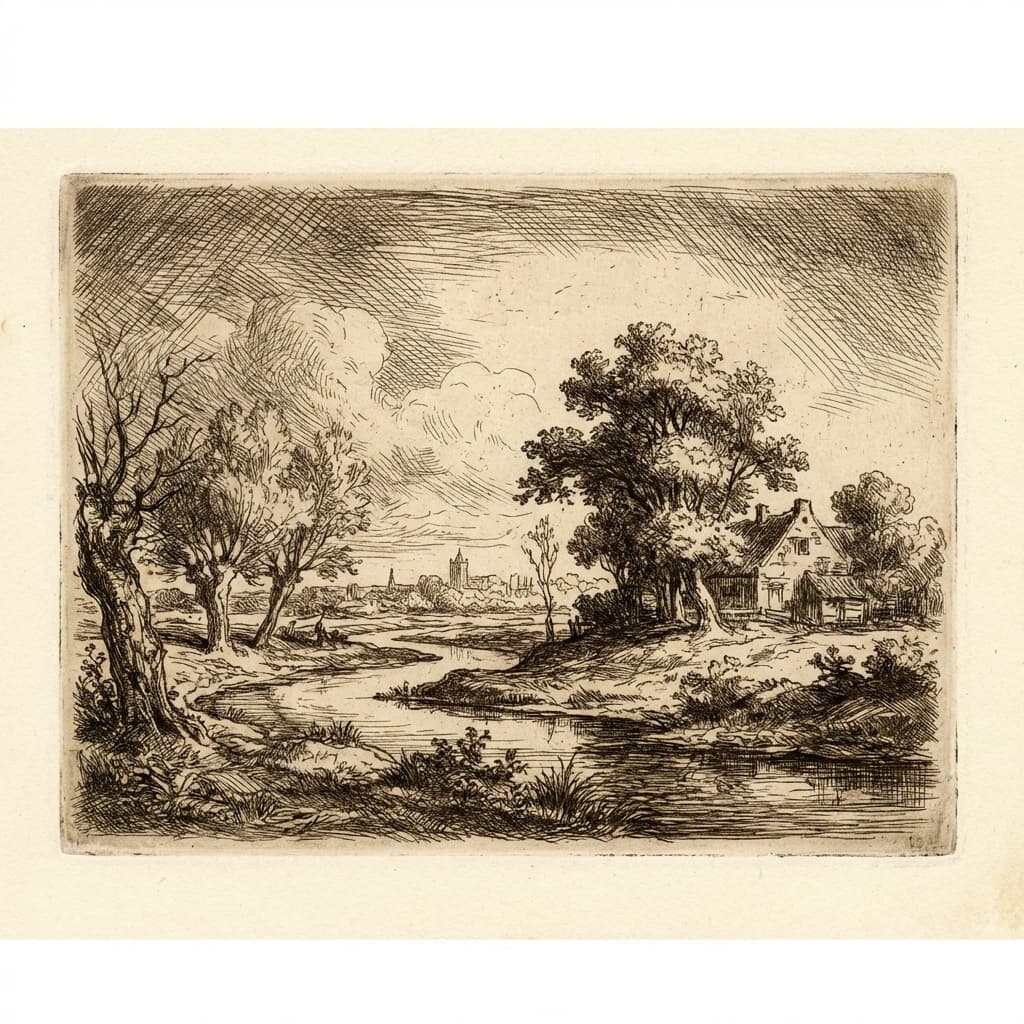
Visual representation of Etching