Engraving
A printmaking technique in which an artist incises a design into a metal plate using a sharp tool called a burin, then inks the plate and presses it onto paper to produce a print with fine, precise lines.
What Is an Engraving?
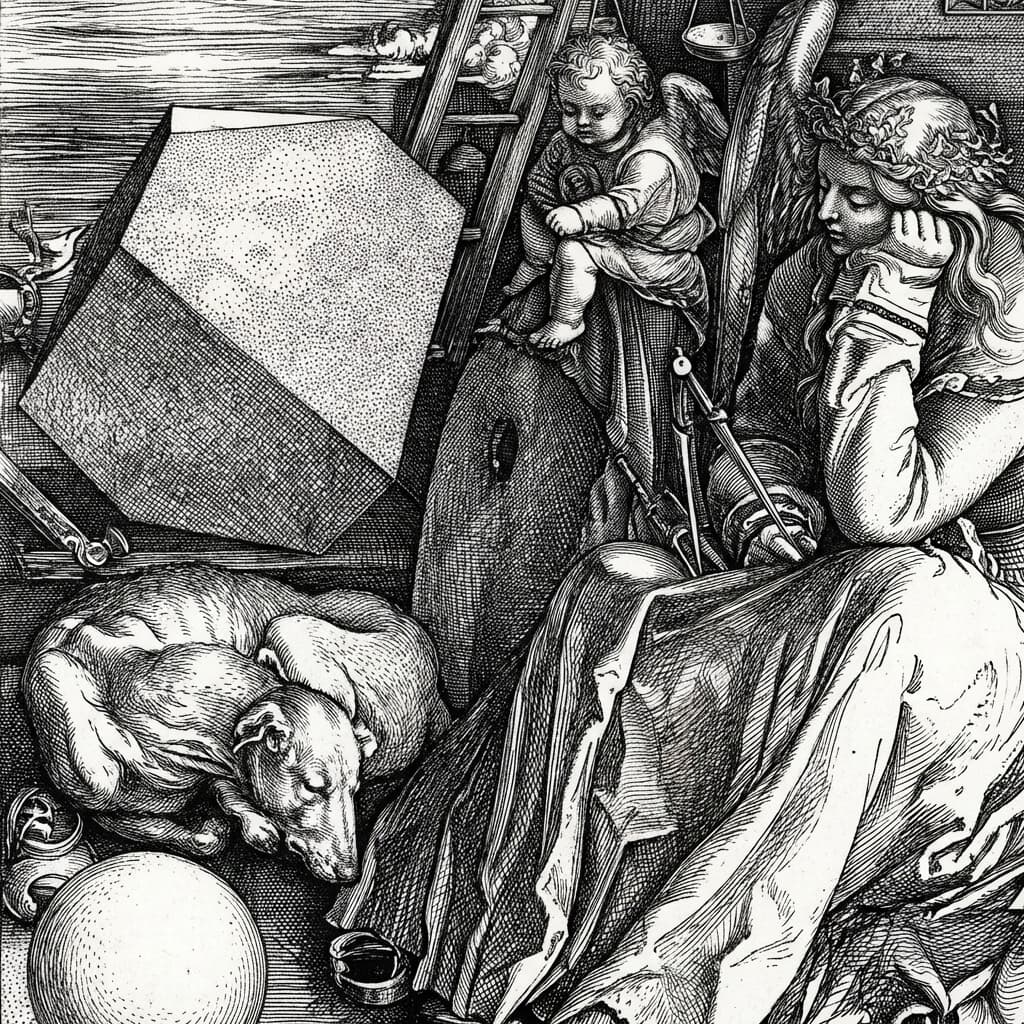
Engraving is one of the oldest and most technically demanding printmaking methods, classified as an intaglio technique because the image is created by cutting lines into a metal surface rather than printing from a raised surface. The artist uses a burin, a small steel tool with a sharp V-shaped cutting edge, to carve lines directly into a polished copper or steel plate. The plate is then inked, and the surface is wiped clean so that ink remains only in the incised lines. When dampened paper is pressed against the plate under enormous pressure in an etching press, the paper draws the ink from the grooves, producing an impression characterized by clean, precise, and slightly raised lines.
The history of engraving as a printmaking medium stretches back to the fifteenth century in Europe. Albrecht Durer elevated the technique to an unprecedented level of sophistication with masterworks like "Melencolia I" and "Knight, Death and the Devil," achieving tonal ranges and textures that rivaled painting in their complexity. The combination of Durer's artistic genius and his command of the burin produced prints that are among the most prized works in the entire history of art on paper. Other major engravers include Andrea Mantegna, Hendrick Goltzius, and William Hogarth, each of whom brought distinctive approaches to the medium.
Engraving differs from etching in a fundamental way: the engraver physically pushes the burin through the metal to cut each line, while the etcher draws through an acid-resistant ground and uses acid to bite the lines into the plate. This distinction gives engravings their characteristic quality of controlled, deliberate lines that swell and taper with the artist's manipulation of the burin, producing a visual effect quite different from the freer, more spontaneous lines of an etching.
Why Does It Matter for Collectors?
Engravings, particularly those by Old Master printmakers, offer an established and well-documented area of collecting with a scholarly infrastructure stretching back centuries. Durer's engravings, for example, have been catalogued and studied exhaustively, allowing collectors to evaluate impressions with confidence regarding their quality, state, and authenticity. Early impressions from a plate are generally sharper and more desirable than later ones, as the metal wears down with repeated printing.
When evaluating engravings, examine the quality of the impression closely. Look for sharp, well-defined lines, good tonal range, and clean margins. Condition issues such as foxing, tears, trimmed margins, and old repairs are common in prints that may be centuries old, and they directly affect value. Working with a reputable print dealer or auction specialist who can help you assess quality and condition is particularly valuable in this field.
Related Terms
Visual representation of Engraving