Edition Size
The total number of impressions or copies produced of a print, photograph, or sculpture, as determined by the artist, which directly influences the work's rarity and market value.
What Is Edition Size?
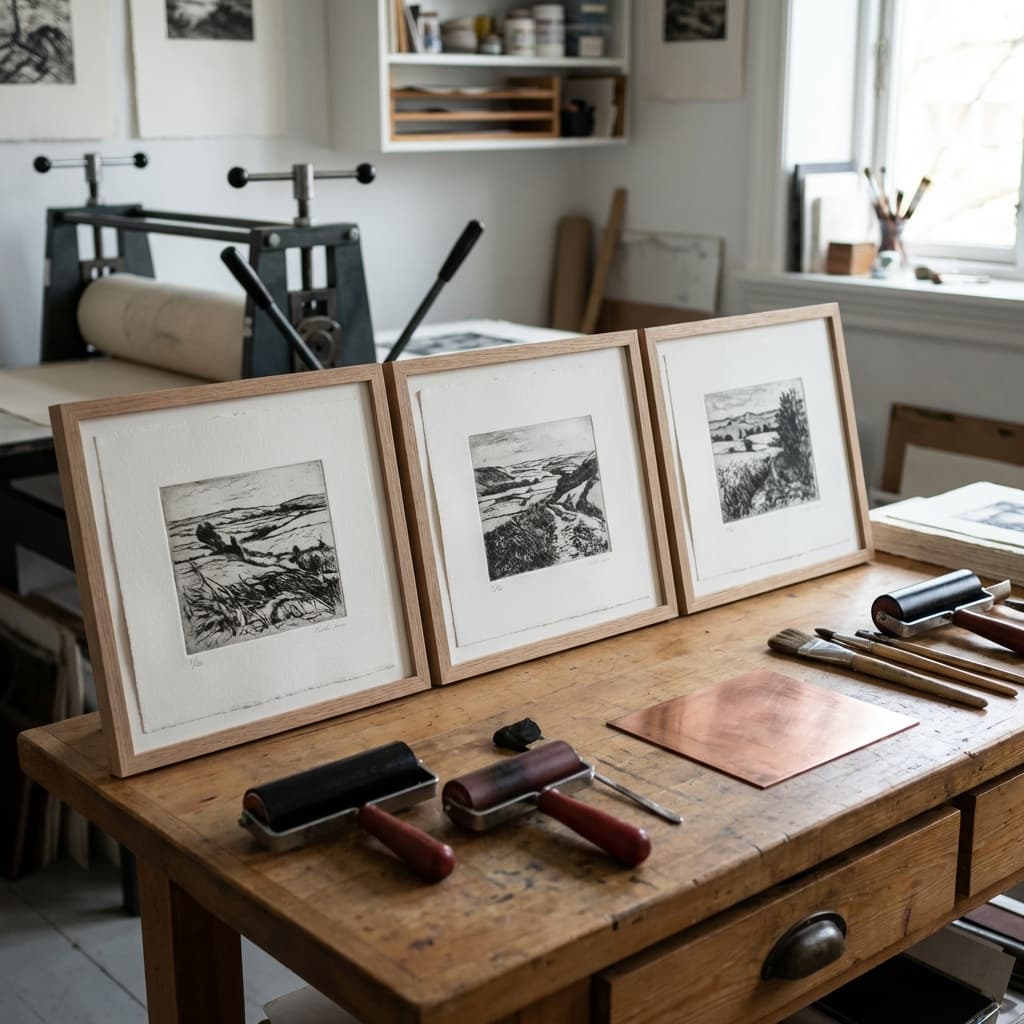
Edition size refers to the total number of identical impressions produced of a work of art that exists in multiples, such as prints, photographs, and cast sculptures. The edition size is determined by the artist, often in consultation with a publisher or printmaker, and it defines the boundaries of scarcity for that particular image or object. A print produced in an edition of 25, for example, means that 25 numbered impressions were made and no more will be created from that plate, stone, or screen.
Edition numbering follows a standard convention. Each impression is marked with a fraction, such as 7/25, meaning it is the seventh impression in an edition of twenty-five. In addition to the numbered edition, artists typically produce several additional impressions designated with specific abbreviations. Artist's proofs, marked "A.P." or "E.A." (for epreuve d'artiste), are retained by the artist and usually represent about ten percent of the edition size. Printer's proofs, marked "P.P.," are given to the printer. Trial proofs, color proofs, and bon a tirer proofs (the final approved version from which the edition is printed) may also exist. All of these extra impressions should be disclosed, as they effectively increase the total number of works in existence.
For photography, edition sizes have become standard market practice over the past few decades. Photographers like Andreas Gursky and Cindy Sherman produce works in very small editions, sometimes as few as five or six, which supports their high market prices. For sculpture, the standard maximum edition for bronze casting is typically eight, plus four artist's proofs, a convention rooted in French foundry law.
Why Does It Matter for Collectors?
Edition size is one of the most direct determinants of value for works that exist in multiples. Smaller editions are rarer and therefore command higher prices. A print from an edition of 15 will, all other things being equal, be worth significantly more than the same image in an edition of 500. When the artist is well established and demand is strong, small editions can appreciate dramatically over time.
When purchasing editioned works, always verify the total edition size, including all proofs and additional impressions. Ask whether the edition is closed, meaning no more will be produced, or whether the artist retains the right to print additional impressions in the future. Be cautious of open editions or very large editions, which offer minimal scarcity value. A reputable gallery or publisher will provide full edition details and documentation with every purchase.
Related Terms
Visual representation of Edition Size