Screenprint
A printmaking technique, also known as serigraphy or silk screen, in which ink is pushed through a mesh screen with areas blocked by a stencil to create an image, widely used for bold, flat color and graphic imagery.
What Is a Screenprint?
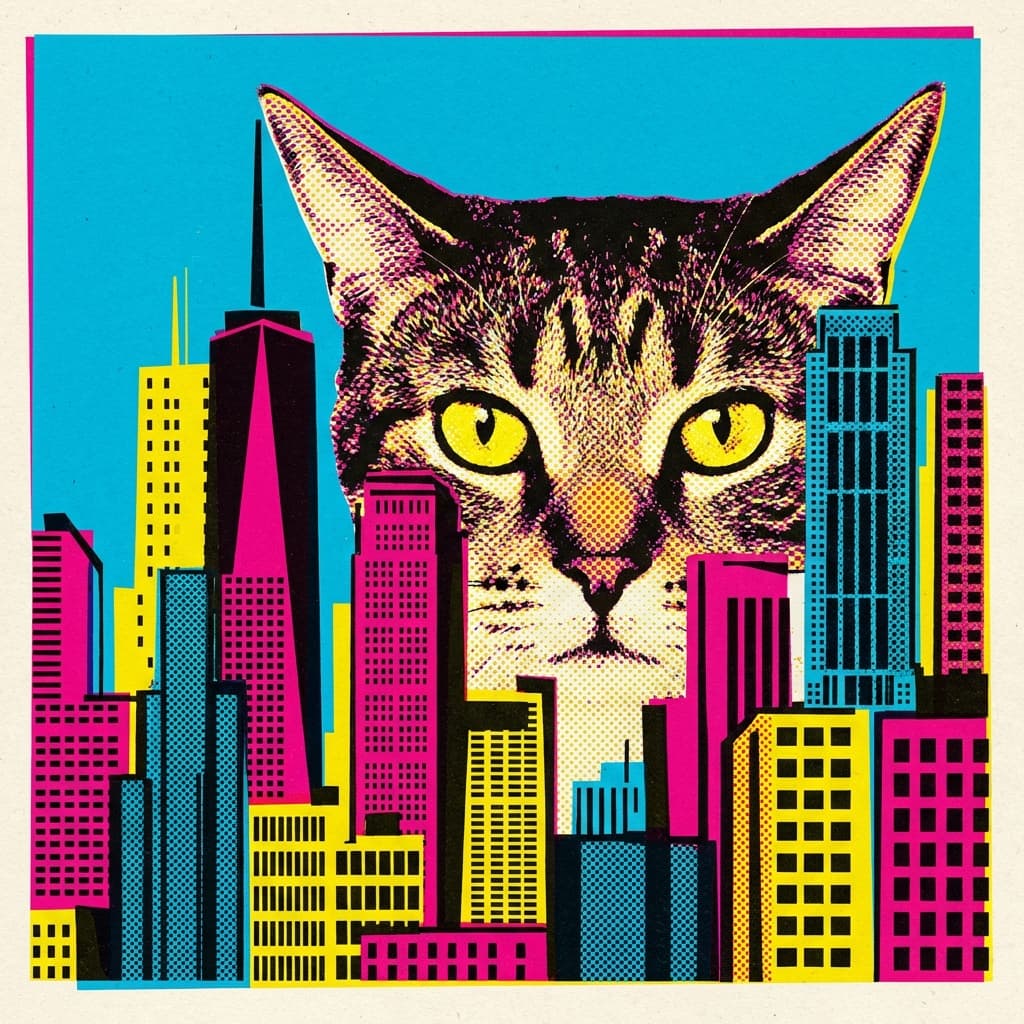
Screenprinting, also known as serigraphy or silk-screen printing, is a printmaking technique in which ink is forced through a fine mesh screen onto paper, fabric, or another surface. The image is created by blocking portions of the screen with a stencil so that ink passes through only in the desired areas. Each color in the final image requires a separate screen, and multi-color prints are built up through successive passes, with each layer precisely registered to align with the others.
The technique was adapted for fine art in the mid-twentieth century, and Andy Warhol became its most famous practitioner. Warhol's screenprinted portraits of Marilyn Monroe, Elvis Presley, and Campbell's soup cans are among the most iconic images in all of modern art. His embrace of screenprinting was philosophically deliberate: the technique's associations with commercial printing and mass production aligned perfectly with his interest in blurring the boundaries between high art and popular culture. The bold, flat colors and graphic quality of screenprinting gave his work its distinctive visual impact.
Beyond Warhol, screenprinting became a favored technique for many major artists. Robert Rauschenberg combined screenprinted photographic images with painting in his groundbreaking silkscreen paintings. Roy Lichtenstein used the technique to produce his Pop Art prints. In the United Kingdom, Eduardo Paolozzi and Richard Hamilton made important screenprints. More recently, artists like Kara Walker and Shepard Fairey have continued to push the medium's possibilities. The technique's ability to produce vibrant, consistent editions has made it one of the most commercially important printmaking methods, widely used in both fine art and design contexts.
Why Does It Matter for Collectors?
Screenprints are among the most popular and accessible categories of collectible art. Warhol's screenprints, in particular, form one of the most actively traded segments of the art market, with individual works ranging from tens of thousands to millions of dollars depending on the subject, edition size, and condition. Prints by other major artists offer entry points at lower price levels while still representing significant artistic achievements.
When collecting screenprints, condition is especially important. The ink surface can be sensitive to abrasion, fading, and moisture damage. Check for even color saturation, accurate registration between color layers, and any signs of fading, particularly in areas of bright color exposed to light. As with all editioned works, verify the edition size, confirm the authenticity of the signature, and request documentation from the publisher or gallery.
Related Terms
Visual representation of Screenprint