Certificate of Authenticity
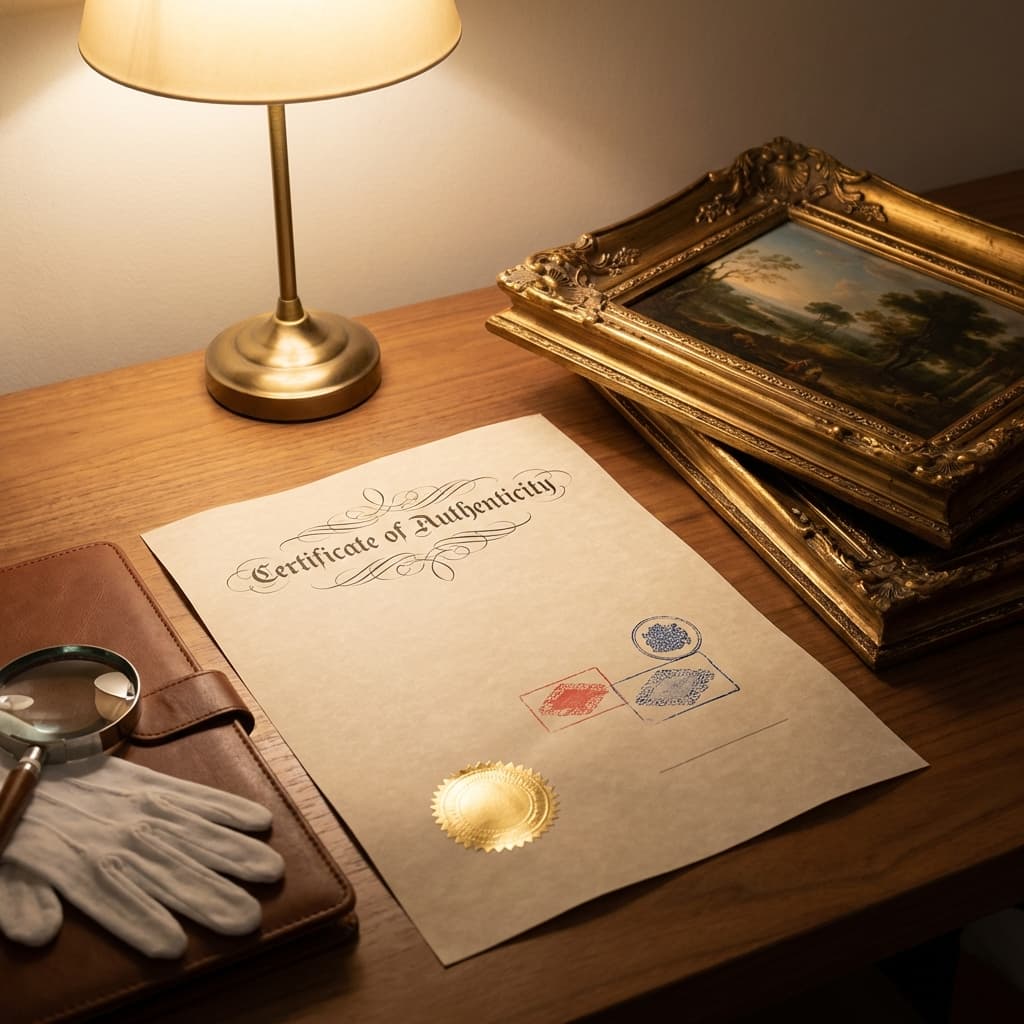
A signed document from the artist, estate, or recognized authority that verifies a work of art is genuine, typically including details about the work's title, medium, dimensions, and date of creation.
What Is a Certificate of Authenticity?
A certificate of authenticity, commonly abbreviated as COA, is a document that accompanies a work of art and attests to its genuineness. At its most basic, a COA identifies the work by title, medium, dimensions, and date, and includes a statement that it is an authentic creation of the named artist. The certificate is typically signed by the artist, the artist's estate or foundation, or a recognized expert or authentication board. For prints and multiples, the COA may also specify the edition number, total edition size, and printing method.
The value of a COA depends entirely on who issued it. A certificate signed by a living artist or a well-established authentication board carries significant weight in the market. For example, the Andy Warhol Foundation's authentication board, which operated until 2011, was the recognized authority for verifying Warhol works, and its determinations profoundly affected market values. Similarly, certificates from artist estates like the Keith Haring Foundation or the Jean-Michel Basquiat estate are considered authoritative. On the other hand, a COA from an unknown gallery, an unqualified individual, or the seller themselves carries little to no evidentiary value and should not be relied upon as proof of authenticity.
It is important to understand that a COA is not the same as a formal appraisal, a provenance record, or inclusion in a catalogue raisonne. A certificate addresses only the question of whether the work is genuinely by the attributed artist. It does not establish monetary value, provide ownership history, or guarantee condition. The most secure authentication combines a credible COA with strong provenance documentation, scientific analysis where appropriate, and expert connoisseurship.
Why Does It Matter for Collectors?
A legitimate COA can mean the difference between a work being saleable at its full market value and being essentially unmarketable. Auction houses, major galleries, and serious collectors all expect authentication documentation, and the absence of a credible COA raises immediate red flags. For prints, photographs, and multiples, where identical images may exist in both authorized and unauthorized versions, the COA is particularly critical.
When purchasing art, always ask for the COA and evaluate its credibility carefully. Check whether the issuing authority is recognized by the market, and be skeptical of generic certificates that lack specific details about the work. If you own works without certificates, research whether active authentication bodies exist for the artist and consider submitting works for review. Maintaining organized documentation, including COAs, receipts, and provenance records, is a fundamental responsibility of responsible collecting.
Related Terms
Visual representation of Certificate of Authenticity